domingo, 6 de abril de 2014

INDIAN CULTURE


LOCALIZACIÓN:

La India es un gran país situado en el sur de Asia . Es el séptimo país más grande y el segundo más poblado del mundo .

LENGUA:

Hay muchos idiomas en la India , que han dado lugar a la aparición de diferentes culturas. La evolución del lenguaje en la India puede ser estudiado en tres períodos: . Antiguo, medio y moderno .

RELIGIONES:

India es el lugar de nacimiento de las llamadas dármicas religiones : el hinduismo , el budismo , el jainismo y el sijismo . Hoy en día , el hinduismo y el budismo son , respectivamente , la tercera y la cuarta religión más practicada en el mundo , tiene alrededor de 1400 dos millones de seguidores en todo el mundo .

MATRIMONIOS CONCERTADOS:

Hace muchos años, la India tiene una tradición de los matrimonios arreglados .
  La mayoría de los matrimonios indios se organizan y planifican por sus padres y otros miembros importantes de la familia.
En el pasado , el matrimonio tuvo lugar cuando aún eran muy jóvenes.
 La pareja espera empezar su matrimonio arreglado no por amor , pero aceptan las reglas impuestas por su entorno social. El amor en las parejas puede surgir con el tiempo.

VESTIMENTA INDIA:

El sari es un vestido tradicional usado por millones de mujeres en el subcontinente indio . Es una larga tela de seda de la luz se envuelve alrededor del cuerpo y vestido.

SALUDOS:

Namaste es una expresión común de saludo o bienvenida  , aunque algunos lo consideran anticuado .
El término namaskar es considerada una versión un poco más formal que namaste pero ambas expresan un profundo respeto . El saludo es de uso común en la India y Nepal por los hindúes , jainistas y budistas , muchos de ellos siguen usándolo fuera del subcontinente indio.


SITUATION:

India is a big country situated in South Asia. It is the seventh largest country and the second most populous in the world.

LANGUAGE:

There are many languages in India which has led to the emergence of different cultures .The language’s evolution in India can be studied in three periods: old, middle and modern.

RELIGIONS:

India is the birthplace of calls dármicas religions: Hinduism, Buddhism, Jainism and Sikhism. Today, Hinduism and Buddhism are, respectively, the third and the fourth most practiced religion in the world, having about 1400 two million followers worldwide. 

ARRANGED MARRIAGES:

Many years ago India had a tradition of arranged marriages.                        
  Most Indian marriages are arranged and planned by their parents and other significant family members.
In the past, marriage took place when they were still very young.
The couple hopes to start his arranged marriage not for love, but accepts the rules imposed by their social environment. Love in those couples can arise over time.

INDIAN DRESS:

The sari is a traditional dress worn by millions of women in the Indian subcontinent. It is a long light silk canvas is wrapped around the body and dress.

GREETING:

Namaste is a common expression of greeting or welcome verbalized, though some consider it old-fashioned.
The term namaskar is considered a slightly more formal version than namaste but both express deep respect. The greeting is commonly used in India and Nepal by Hindus, Jains and Buddhists, many of them continue using it outside the Indian subcontinent.


martes, 1 de abril de 2014

AROUND WALLS


Hikikomori  es un término japonés para referirse al fenómeno social que las personas apartadas han escogido abandonar la vida social; a menudo buscando grados extremos de aislamiento y confinamiento, debido a varios factores personales y sociales en sus vidas.

A mi no me gustaría ser un Hikimori ya que me gusta salir y ser libre y no estar encerrada en mi casa sin comunicarme con nadie; pues me considero una persona muy sociable.

En el sitio donde hay más Hikomoris es en Tokyo, y posiblemente sea por la economía que hay en Tokyo 
pero también porque viven en casa de sus padres durante mucho tiempo.

Yo pienso que los Hikimoris existen por el aislamiento social, por los problemas personales y sobre todo económicos y por que viven por y para internet u otras aficciones relaccionadas con el ordenador.

Su efecto negativo esque se aislan de la sociedad y sufren de mentalidad.


Hikikomori is a Japanese term for remote social phenomenon that people have chosen to leave the social life, often seeking extreme degrees of isolation and confinement due to various personal and social factors in their lives. 

I really do not like to be a Hikimori since I like to go out and be free and not be locked in my house without communicating with anyone, because I consider myself a people person. 

In the place where there is more Hikomoris in Tokyo, and possibly the economy's in Tokyo
but also because they live at home with their parents for a long time

I think that there Hikimoris social isolation, by personal problems and especially economic and living and to internet or other hobbies Related with computer. 

Your esque negative effect are isolated from society and suffer mentality.


martes, 25 de marzo de 2014

IN MY OPINION...

Hay varias cosas que me gustaría destacar de su asignatura:

1) Me parece una manera de aprender cosas nuevas, ya que con cada post aprendemos palabras, lugares, conocimientos... los cuales antes eran desconocidos para nosotros.
2) Es una asignatura que nos enseña a saber escribir y redactar y representar todo lo que sabemos
3) También sirve para reforzar el nivel de inglés, y aprender nuevas palabras ya que al aprender una palabra nueva en español, al traducirlo, la aprendemos en inglés.
4) Por último pienso que es una manera de despejarnos y escribir lo que queramos para que todo lo lean, porque además de los post que nos mande, también podemos escribir cosas que nos interesen y nos gusten.

Cosas que pienso que se podrían mejorar serían:

1) El número de comentarios
2) El tiempo en clase no nos cunde ya que los ordenadores van un poco lentos, por lo tanto mejorar el material de clase nos sería muy útil.

Es una asignatura que personalmente me gusta mucho y que cambiando esas cosas sería muy productiva.

There are several things I would like to highlight your subject :

1) I find a way to learn new things, and that with each post we learn words , places , knowledge ... which were previously unknown to us.
2) It is a course that teaches us to know how to write and write and represent everything we know
3) Also serves to reinforce the level of English , and learn new words as learning a new word in Spanish , to translate it, learn it in English.
4) Finally I think it's a way to sober up and write what we want to read it all , because in addition to the post to send us, we can also write things that interest us and we like them .

Things that I think could be improved are:

1) The number of comments
2) Time in class sees no reason we as computers go a little slower , thus improve the class material we would be very useful .

It is a subject that I personally really like and that changing those things would be very productive.


miércoles, 5 de marzo de 2014

NIEVE EN LOS ÁRBOLES

Valle del Jerte es una comarca de ExtremaduraEspaña. Está situada en su extremo nororiental y limita al norte con las provincias de Ávila y Salamanca, al oeste con la comarca del Ambroz, por el Sur con la ciudad de Plasencia y al este con la comarca de la Vera.

El Valle del Jerte está formado por once municipios, agrupados en la Mancomunidad de Municipios del Valle del Jerte, que se reparten de forma desigual la población vallense, que consta aproximadamente de unos 13.000 habitantes 

 Lo más especial de este lugar es lo que ocurre entre el 20 de marzo al 10 de abril cuando todas las colinas se llenan de flores balncas, a lo que se le llama LA FLORACIÓN DE LOS CEREZOS. Este espectaculo solo ocurre una vez al año y duro unos pocos de días, por lo tanto nadie se cansa de verlo.

El Valle del Jerte se encuentra entre dos cadenas montañosas dentro del macizo de Gredos: la Sierra de Tormantos al sureste y los montes de Traslasierra y sierra de Béjar al noroeste. Desde Córdoba a Valle del Jerte hay una distancia de unos 420km.

A mi personalmente me gustaría mucho poder visitar Valle del Jerte pero en la fecha que tiene lugar la floración de los cerezos, ya que es un espactáculo que solo ocurre una vez al año donde puedes conectar con la naturaleza. me gustaría visitarlo con mi familia y amigos.

Además alli podemos realizar actividades de turismo por unas rutas con una vegetación impresionante lleno de cascadas y fauna, donde pasar un buen rato y conocer más vegetación.

http://www.casasrurales-valledeljerte.com/01valle_jerte.html


Valle del Jerte is a region of Extremadura, Spain . It is located in the northeast corner and bordered to the north by the provinces of Ávila and Salamanca , west to the region of Ambroz, on the south by the city of Plasencia and east by the district of Vera.

Valle del Jerte consists of eleven municipalities , grouped in the Association of Municipalities Valley Parks , spread unevenly the Valls population, which consists of approximately 13,000 inhabitants

 The special thing about this place is what happens between March 20 to April 10, when all the hills are filled with flowers balncas , what is called BLOOM OF CHERRY . This show only happens once a year and hard few days , so no one gets tired of seeing it.

Valle del Jerte lies between two mountain ranges in the Gredos massif : Sierra Tormantos the southeast and the mountains of Sierra de Béjar Traslasierras and northwest . From Cordoba to Valle del Jerte is a distance of about 420km .

For me personally I would love to visit Valle del Jerte but the date the cherry blossom takes place , as it is a show go that only happens once a year where you can connect with nature. I would like to visit with my family and friends .

We may also tourism activities there for a few routes with stunning waterfalls full of vegetation and fauna, which have a good time and meet new vegetation.

lunes, 3 de marzo de 2014

MÁS VERDE


El pinsapo es una especie de abeto, perteneciente a la familia Pinaceae y de distribución restringida a sierras mediterráneas del sur de la península ibérica y el Rif.

  The pinsapo is a species belonging to the family Pinaceae and distribution restricted to southern Mediterranean mountains of the Iberian Peninsula and the Rif.


 El hábitat natural de esta especie se localiza al sur de la península ibérica y en el Rif marroquí. Las principales poblaciones aparecen en varios puntos de las Sierras de Málaga y Cádiz, en el extremo occidental de la cordillera Bética.


The natural habitat of this species is located south of the Iberian Peninsula and the Moroccan Rif. The main populations are found in various points of the Sierras de Málaga and Cádiz, at the western end of the Betic Cordillera.


Excursión: Ruta del pinsapo.

Se trata de andar durante 4 horas unos 10 km.
Alojamiento  en el hotel Baños de la Villa .
60 euros por una noche con bufe incluido.

Tour: Route of Spanish fir. 

It is walking for 4 hours about 10 km
Overnight in Hotel Baños de la Villa. 

60 euros for one night with bufe included.

http://www.juntadeandalucia.es/medioambiente/servtc5/ventana/mostrarFicha.do?idEspacio=7402


lunes, 24 de febrero de 2014

MORE NATURE


En este post os hablaré de tres bonitos paisajes andaluces:

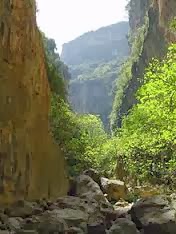
En primer lugar “La Garganta Verde”, un espectacular cañón excavado por el Arroyo del Pinar a lo largo de los años. Se encuentra situado en plena Sierra de Grazalema, a unos 5 km de la localidad de Zahara de La Sierra.
El nombre le viene de la frondosa vegetación que tapiza sus elevadas y verticales paredes, que llegan a alcanzar una profundidad de 400 metros.

Las distancias de Córdoba a la garganta son:
1.- Por la A-4 y A-384, 167 km
2.- Por la A-4, 176 km
3.- Por la A-5 y A-384, 199 km
Podríamos alojarnos en el hostal Arco de la Villa por 44€ la noche. Tiene muy buenas vistas al embalse y es un lugar muy cálido y acogedor.


En segundo lugar “El Peñón del Zaframagón”, una formación rocosa 
situada en la Reserva Natural del Peñón del Zaframagón, que marca el límite entre las provincias de Cádiz y Sevilla. Está situado dentro del recorrido de la Vía Verde de la Sierra, formada por seis pueblos pertenecientes a las provincias de Sevilla y Cádiz.

Las distancias de Córdoba a éste peñón son:
1.- Por la A-4, 158 km
2.- Por la A-45 y A-384, 191 km
3.- Por la A-384, 178 km
El alojamiento más cercano y económico, sería el hostal El Prado, en plena Sierra de Cádiz y con un precio no superior a los 25€ por noche/persona.


Por último el municipio de “Cortes de la Frontera”, situado al oeste de la provincia de Málaga, en el Valle del Guadiaro, Serranía de Ronda. Es el mayor municipio de su comarca, y el segundo de la provincia de Málaga. La mayoría de la superficie de este municipio se encuentra repartida entre Parques Naturales (Sª de Grazalema y Los Alcornocales)

Las distancias de Córdoba a este municipio son:
1.- Por la A-4, 191.7 km
2.- Por la A-45, 221.8 km
Nos podríamos alojar en el Albergue Inturjoven, un albergue de la Junta de Andalucía, por 16€ la noche.


----------------------------------

In this post I will tell you three beautiful Andalusian countryside :

First " Green Throat " , a spectacular canyon carved by the Arroyo del Pinar over the years. It is located in the Sierra de Grazalema , about 5 km from the village of Zahara de La Sierra.
The name comes from the lush vegetation lining its high vertical walls , which can reach a depth of 400 meters.

Distance from Cordoba to the throat are :
1 - . 's A- 4 and A- 384, 167 km
. 2 - What's A-4 , 176 km
. 3 - What's A -5 and A- 384, 199 km
We could stay in the hostel Arco de la Villa on 44 € per night. It has great views of the reservoir and is a very warm and welcoming.

Second " The Rock of Zaframagón " , a rock formation
located in the Natural Reserve of Zaframagón Rock , which marks the boundary between the provinces of Cadiz and Seville. It is located within the route of the Via Verde de la Sierra , consisting of six villages belonging to the provinces of Seville and Cadiz.

Distance from Cordoba to this rock are:
1 - . 's A-4 , 158 km
. 2 - The A- 45 and A- 384, 191 km
. 3 - What's A- 384, 178 km
The closest budget accommodation would Hostal El Prado, in the Sierra de Cádiz and priced not exceeding € 25 per night / person .

Finally the village of " Cortes de la Frontera" , located west of the province of Málaga, in the Valley of the Guardiaro Serrania de Ronda. It is the largest town of the region, and the second in the province of Málaga . Most of the surface of this town is divided between natural parks ( S ª de Grazalema and the Acorns )

Distance from Cordoba to this municipality are:
1 - . 's A-4 , 191.7 km
. 2 - The A- 45, 221.8 km

We could stay at the Albergue Juvenil , a shelter from the Junta de Andalucía, for 16 € per night.

sábado, 15 de febrero de 2014

"TEMPUS FUGIT"


Yo creo que lo que falta en el poema es el autor, ya que habla del pasado al igual que del presente y del futuro.
La persona que habla en el poema debe ser Merlin.

La mayoría de los poemas suelen tratar sobre la muerte o el amor; en este caso el autor habla sobre el paso del tiempo en relación con la muerte, es decir, sobre la vejez.
El mismo título del poema nos ayuda a descifrar el tema (EROSIÓN).

Ávalon o Avalón es el nombre de una isla legendaria de la mitología celta en algún lugar de las islas Británicas donde, según la leyenda, los manzanos dan sabrosas frutas durante todo el año y habitan nueve reinas hadas; entre ellas, Morgana.

El Santo Grial es el plato o copa usado por Jesucristo en la Última Cena.


Mordred es un personaje de la mitología celta, hijo incestuoso del Rey Arturo y Morgause, conocido por haber sido muerto por el Rey Arturo y,
 y, al mismo tiempo, acabar con su vida en la Batalla de Camlann.


-----------------------------------

I think what is missing in this poem is the author, because it talking about the present and future and the past. 
The speaker in the poem must be  Merlin

Most of the poems are usually about death or love, in this case the author talks about the passing of time in relation to the death, that is, about old age. 
The very title of the poem helps to decipher the subject (EROSION). 

Avalon or Avalon is the name of a legendary Celtic mythology island somewhere in the British Isles where, according to legend, apple give tasty fruits throughout the year and nine live fairy queens, among them Morgan. 

The Holy Grail is the dish or cup used by Jesus at the Last Supper. 


Mordred is a character in Celtic mythology, the incestuous son of King Arthur and Morgause, known to have been killed by King Arthur and, at the same time, end his life at the Battle of Camlann.